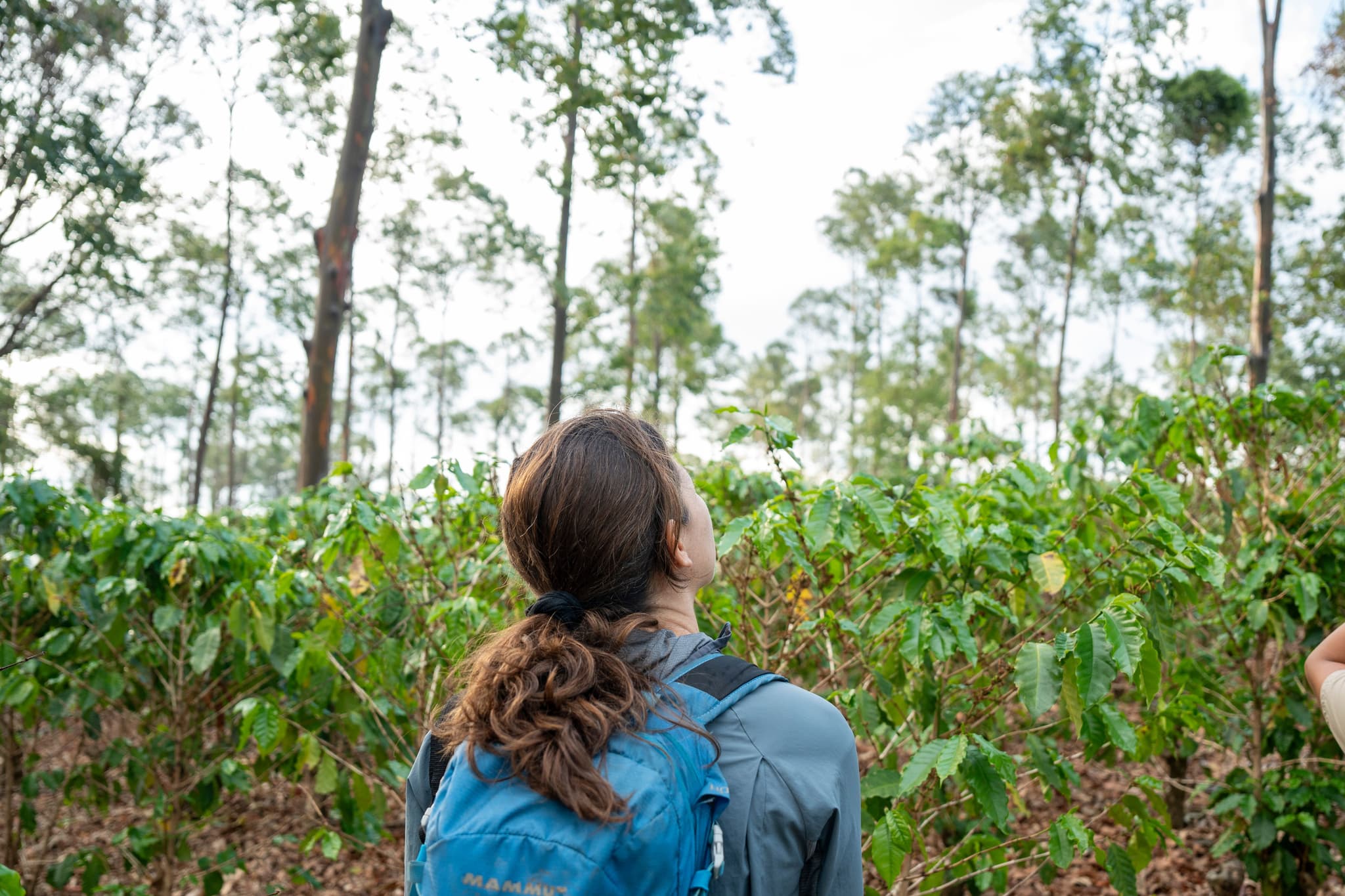
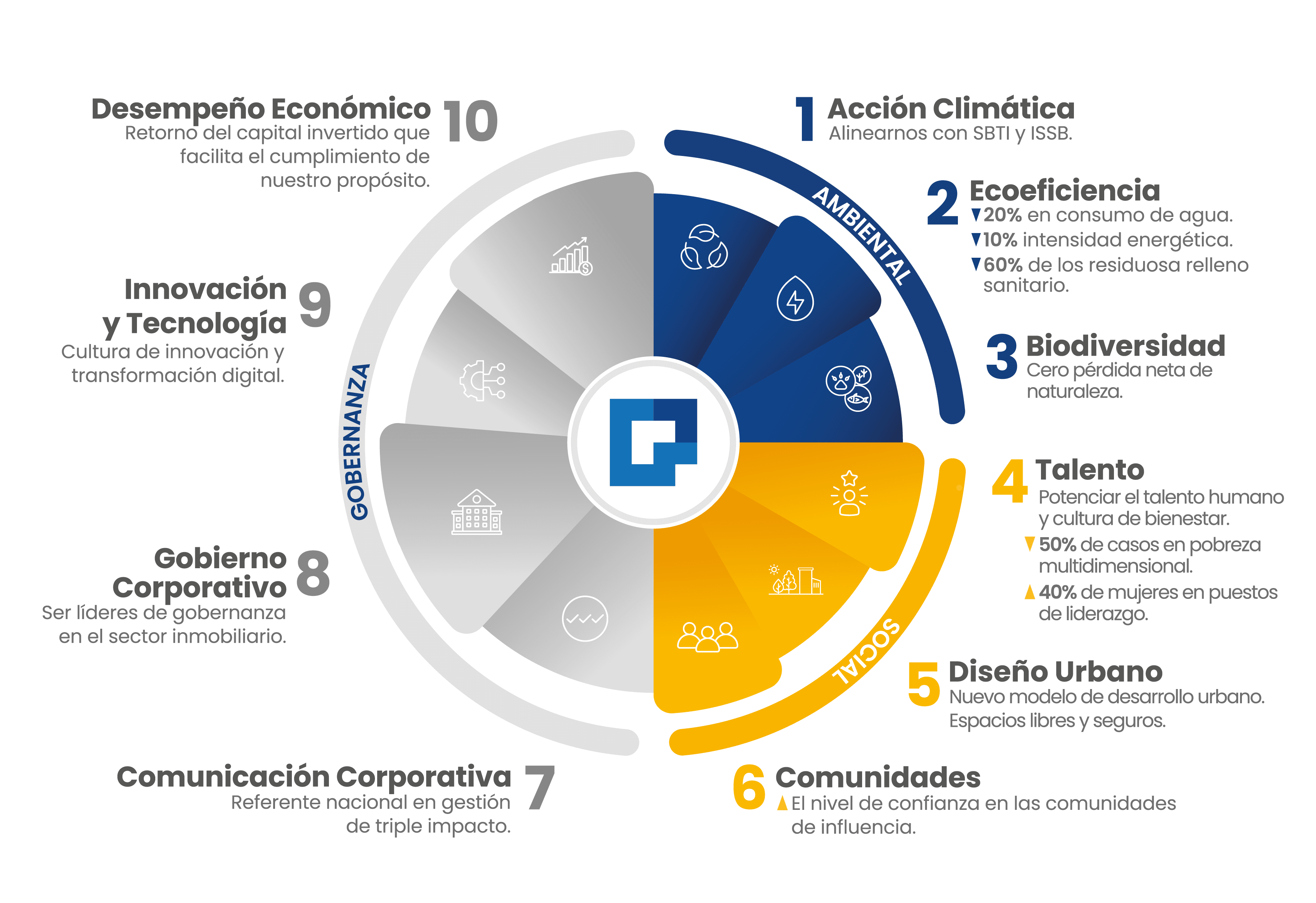
When we are given the responsibility of transforming farms that have been part of a family legacy for so many years, we know that one of our greatest impacts will be the change in land use and the alteration of an ecosystem that has existed for 150 years. That is why, at Portafolio Inmobiliario, we decided to work with expert biologists to establish biodiversity baselines, that is, the life of the species, rivers, and trees that were there long before us.
We conducted field sampling during the dry and rainy seasons of 2024. We observed, measured, and recorded using established academic methodologies to establish a profile of bioindicator species (organisms that, due to their sensitivity to environmental changes, allow us to assess the actual health of an ecosystem).
What are bioindicators and why are they so important?
Bioindicators are species that react visibly to changes in their environment, whether due to changes in water quality, air pollution, or habitat fragmentation. Through their presence, abundance, or behavior, we can infer the ecological status of a place.
In our study, we chose to observe birds, amphibians, reptiles, and aquatic macroinvertebrates. Each of these groups offered us a different window into understanding the vitality—or vulnerability—of the ecosystem.
The results impose a great responsibility on us:
• We recorded 12 species of birds, including some endangered species, such as the peregrine falcon and the Costa Rican finch. The latter has also been recorded in our Aleste project, which reaffirms our commitment to creating urban biological corridors.
• We counted seven species of amphibians and eight species of reptiles.
• We found 66 species of plants, some classified as vulnerable, whose conservation is vital to the balance of the ecosystem.
Water quality analysis confirmed what we already suspected: the footprint of urban pollution weighs heavily on rivers and streams. This finding prompted us to take decisive action.
Based on this data, we committed to:
• Restoring riparian areas to improve water quality and protect aquatic biodiversity.
• Protect key species such as higuerones, trees that are true “islands of life” for hundreds of species of birds, mammals, and insects.
Every tree we preserve, every river we restore, and every species we protect is an investment in a future where the city and nature can grow together.
Today more than ever, we believe that true development is not about imposing, but about coexisting.